Wednesday, November 16, 2016

Pig Days Coming


We woke up this morning to snow on the hills around us; quite suddenly, the weather we need is here. It's been an agonizingly warm fall, with early November rolling from 60-degree day to 60-degree day with 45-degree nights between. I don't usually agonize over day- and nighttime highs and lows, but to butcher pigs without a walk-in-size refrigerator, the nights must be between 32 and 40 degrees. So we agonized, and the 45-degree nights stretched seemingly endlessly from early September until now.

At last, there is snow and cold (and even maybe too much cold, the irony of which I cannot bear), and we are ready to go. Tomorrow. 

***


Our two pigs are bordering on gargantuan these days. They've lived out a luxurious life in the woods near our house, feasted on organic grain and hundreds and hundreds of pounds of apples and pears (a steady stream since August). When I feed them in the mornings, I catch myself analyzing their legs and bellies. There's some serious ham and bacon under there. I'm only a little sad to see them go. All along, their purpose has been to live well, get huge, and end up in our kitchen. To us, it is a very satisfying and rich process. In these days of mass-produced and mass-slaughtered meat, of animals raised in tight and terrible quarters, of impersonal vacuum-sealed packages of flesh, this is something different.

I have found there's nothing like raising your own animals to inspire passion against the commercial meat industry.

And, true, to generate a lot of work.


***


It's been two years since our last pig slaughter on Vashon, with our friends John and Bri. Since, we've butchered a lamb, a ewe, and two goats, plus a lot of chickens, but pigs feel like another level, another realm. Not only because our process over the next three days includes a 20-gauge shotgun, a tractor, a chain hoist, a 55-gallon food-grade barrel, a propane burner, our sharpest carbon-steel knives, two KitchenAid mixers, a sausage grinder and stuffer. There's the complexity of the kill and stick, and the precise 150-degree temperature of the scald for scraping, and the 12-page cut sheet detailing our butchering goals to deliver pork to my aunt and uncle, parents and sister, our own freezer, and our charcuterie room.

Did I mention we are tackling 12 different charcuterie recipes, from pate and smoked bacon to coppa and prosciutto?

My project-management brain has been in high gear.

I am hoping and praying that our preparations and discussions and, yes, mishaps and miscommunications over the last two months will give us a solid framework for the next three days of work--so we can relax, let our rehearsing take over, and dig into the work together. I deeply want to be able to savor the process with Tim and everyone who comes to help.

Then, Sunday, we can rest. And eat pork chops.

Wednesday, September 7, 2016

The Harvest Garden

Oh, fall, you came so fast. One day it was 90 degrees and the next dreary and rainy and we needed a fire. 

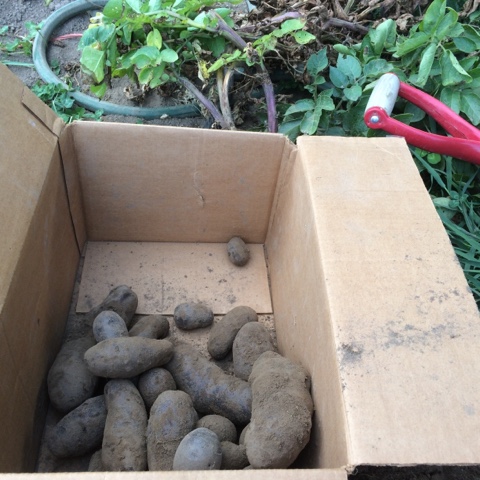
The garden is a weird mix of peak and dying now. The eggplant and peppers and tomatoes and zucchini are churning along at near-full force. But in the last few weeks, we've dug all our potatoes and harvested all our shell beans and onions, finished off the broccoli and most of the cabbage, brought in all the carrots—and the garden has more empty spaces than green growing things. Plenty of the green things are weeds; I gave up on that front in July. Also the sunflowers are all falling over.

Not a super pretty picture, but a satisfying one, actually. We are ready for a season of rest out there, and it feels just delicious to have a houseful of stored winter things in cupboards and closets. Now we can turn our full attention to the pigs, and the process of bringing that winter food into the freezer. 


Wednesday, August 31, 2016

Zucchini and Purple Potato Fritters

It's been a summer of fritter obsession. Weeks ago, we fell hard for zucchini fritters and ate them somewhat nonstop for an amount of time that I shouldn't fess up to. There was something about pillowy zucchini fritters with slices of juicy fat tomato on top, and cold beer on the side, that was so right for the endlessly hot days of August. 

Then, a few days ago, I discovered potato latkes and tumbled into another obsession—crispy crispy fried potato with the softest middles. Paired with nothing. Gobbled. And, probably not a good thing, so easy to make with ingredients we have an abundance of: egg, potato. 


We're in a crossover season, the blurring line between two things, the liminal, as I think a poem I loved on England Semester called it. Still tons of zucchini, eons of green tomatoes, and light long into the evening. But the garden is emptying, and all of our potatoes are in the garage, and today it was cool enough inside to want a fire in the wood stove. 


It is relentless and unavoidable, and so I give in. Okay, fall. Welcome. 

But today for lunch these fritters straddled the divide, one foot in summer, another in the season to come. It's zucchini fritters meets potato latkes: soft inside, crispy out. Delicious with cheese and garden tomato, or plum-cardamom butter smeared on top. Warming, and an ode to the zucchini days of summer. 


Two pounds zucchini, potatoes, and onion, grated. Don't fret about the ratio. Make sure the potatoes are amethyst purple, for fun. 

Add two teaspoons salt and let sit over a strainer for 20 minutes. Then press firmly with a spoon or your hands to squeeze out as much liquid as you can. Honestly, I cannot bring myself to dirty a dishtowel by wringing out the veg in it. 


Add two eggs, 1/2 cup flour (I used Bluebird Grains Einka) and 1/2 teaspoon baking powder. Mix. 

Fry in coconut oil in a hot cast iron skillet, 4 minutes per side. Keep them warm in a 250 degree oven, right on a sheet pan lined with foil, or a sheet pan lined with a wire rack if you prefer. 

Consume twelve 3-inch fritters with summery or autumnal toppings, wherever your heart lies these days. 


Tuesday, August 30, 2016

Quick Red Wine-Plum Sauce


After I harvested 40 or so pounds of plums the other weekend, I felt done with plums--so over stirring plum jam, content with the amount of plum butter in the pantry, and ready to move on.

But I didn't know that Italian prune season hadn't even begun yet. And seriously, they fall from the sky into the kitchen, and I just can't seem to say no or give them to the pigs.


Italian prunes, happily, are much simpler to process than the clingstone plums we've worked through earlier this summer. They are freestone, which means you make one short slit with a knife, pull the halves open with your fingers, and pluck out the pit.

Lsat night, we started a dehydrator full of them. Today, more plum butter. Both of those are starting to feel routine, but the plum compote Tim suggested we make last night has reinspired my feelings about plums. I do love plums. We used it on salmon, and tonight I think I'll try it again with goat. It's sweet and tart at the same time, and would be delicious on anything from chicken to pork to steak. Best of all, unlike dehydrated plums and plum butter, it takes barely any time to make.


Start by dicing up some plums. Maybe three to four per person. 


Put them in a small sauce pan, and add a glug of red wine, enough to cover the bottom. 


Throw some diced onion and a sprinkle of salt on top. Cover and simmer over medium-high heat for three minutes, until the plums are soft. Take off the lid and simmer for another three or four minutes, until you can drag a wooden spoon across the bottom of the pan and the red wine won't rush back in to fill the gap. The onions will be somewhat al dente, which I liked as a contrast to the soft and collapsing plums.

Stir in a pat of butter, and serve.  

Saturday, August 20, 2016

Apple-ing, and Quick Preserving Tricks


As we picked apples the other day, I was thinking about a verse in Psalm 1: the one whose delight is in the Lord is like a tree planted by streams of water, that yields its fruit in season.  

That phrasing sounds so modest, until you see a monstrous mature apple tree—and "yielding" becomes heavy with fruit, churning out pounds of it by the hundreds, fruit that is crisp and sweet and flawlessly white when you cut inside. Fruit that you can pick sixty pounds of without too much effort or time on a sunny summer evening. 


We're just now emerging from three evenings of processing the apples, long hot evenings of coring and chunking, cooking and blending, and boiling and boiling water. It's not a bad way to spend a summer night, especially if you blast some Etta James, drink cold beer, and consume massive amounts of zucchini fritters and fresh tomatoes for sustenance.  


For most of the last few weeks, though, we haven't had the time to devote to canning marathons like that; we've had a steady stream of summer guests and activities. Vegetables may be expiring on my counter, but people must also be fed--now, not in the fall! And of course I yield to the call of outside summery things like hiking, river rafting, and plain old relaxing in the front yard with family, dogs, and glasses of fresh iced apple juice. 

But still, those vegetables call to me for help, and I'm loathe to just let them totally expire on the counter. Here's what I've tried so far that is fast and, unlike canning, very easily multitasked: 

Zucchini
Cut the blossom end off, but leave the stem end on for a handle. Grate it up on a microplane (or with a food processor grating attachment, but I lost mine in the move and have found that a microplane takes hardly any time anyway); use the stem end handle with caution so you don't grate off your knuckles. Steam blanch for 1 or 2 minutes. Portion into ziplock bags, zip closed, and immediately dunk in an ice bath to cool. Freeze--and have zucchini fritters year round! 

Tomatoes 
Our tomatoes are ripening so slowly right now, and I'm harvesting just a handful of the paste varieties at a time. Not enough for a big canning to-do, and anyway, I've sworn off tomato canning for the year; I detest seeding and peeling them. My favorite way to small-batch process them is this: Chunk up as many as you have, heat in a pan until soft and juicy (about 10 min), and immersion blend. Cool and freeze. I did just enough for a quart ziplock this afternoon while I made some lunch. No time at all, and the tomatoes are saved! Phew. 

Cucumbers 
I've recently become so obsessed with eating pickles at lunch (with cuts of smoked salmon, slabs of cheese, a hardboiled egg, and cherry tomatoes) that I seriously must can more, or else we will run out in October. But sometimes there's no time for that, so I've been fermenting them. 

You don't even need to chop the pickling cucumbers (or you can, if they are bigger than 5 inches). Just wash them gently, pull off any blossom, and layer them in a half-gallon mason jar with some pickling spice, garlic (don't peel, just cut in half), and grape leaves. Cover in a brine of 1 quart water + 3 tablespoons salt, and make sure the pickles are submerged; a half-pint jar fits perfectly in the mouth of a half-gallon jar as a weight. Place a dish towel over the top. Leave on the counter for a week or so, until the brine is cloudy and the cucumbers look like pickles. Move them to the fridge, where they'll keep for a long time. 

What I love about this is that you don't need a recipe, or any measuring utensils, or any specific amounts of anything. Small batch it, big batch it, do it while you make dinner. 

Celery 
We didn't grow any, but our landlord gave us a bag of beautiful stalks the other day. You can chop and freeze them without blanching--leaves included. The fragrance of celery leaf perfumed the whole kitchen as I bagged them up. Use in soups and stews in the wintertime. 

Berries 
Spread them whole in a single layer on a sheet pan, cover with plastic wrap, and freeze for a few hours. Then transfer to gallon ziplock bags. There will be plenty of time to make loads of blackberry jam in the winter... 

What else? What quick-preserving ideas have saved your veggies this summer? 

Saturday, August 6, 2016

Fennel Frond Pesto


It's the time of year I dream about. The other night we made chicken soup with carrots, potatoes, turnips, fennel, and summer squash, and the only ingredient that we didn't grow--counting the chicken--was the tomato paste.

I love fennel, cooked and raw, and so I am slightly sad that the bulbs in this year's crop turned out pretty shrimpy. Not enough sunlight? But the fronds are tall and thick and green and gorgeous. So, since the freezer is nearly out of nettle pesto from earlier this spring, I made some fennel frond pesto.

Smeared on homemade bread and covered with juicy jaune flamme tomatoes and crisp lemon cucumbers, it made the most perfect al fresco summer dinner.

Fennel Frond Pesto 
Makes about 2 cups
When I make pesto, I go by taste rather than by any recipe. I kept track generally of the amounts I used, but keep tasting and blending, tasting and blending as you make the pesto, adding more of anything as you go.

Fronds of 3 small fennel
Bulb of 1 small fennel
1 cup almonds (toasted, optionally; I did not)
1/4 cup parmesan cheese chunks
2 to 3 small garlic cloves, peeled
Juice from 3/4 lemon
1/2 teaspoon salt, plus more to taste
Pepper to taste
1/2 to 1 cup olive oil

Blend up the fennel fronds and bulb in a food processor for about 30 seconds. Add the almonds, parmesan cheese, garlic, lemon juice, salt, and pepper, and blend until the almonds are finely ground and don't crunch obviously in your mouth when you try some. With the blender running, add the olive oil until the pesto swirls in a smooth, continuous wave around the food processor bowl (no big balls of green rumbling around). Blend for another minute or two. I found that this pesto needed more blending than a basil or nettle pesto, because the little feathery fennel fronds took a while to not be a feathery texture in my mouth when I tried a bite.

Taste the pesto, adjust the lemon juice, salt, and pepper as needed. Blend some more. Let the pesto sit for at least 10 minutes before you use it for the flavors to meld together.

Serve as a bread spread with tomatoes, cucumbers, and/or feta cheese; toss with pasta; or freeze in an ice cube tray, then transfer to a freezer bag, where it will keep for a few months.

Saturday, July 16, 2016

Spring in July

July 5 came and went, and summer forgot to show up. From a distance, the garden looks lush and jungle-like and summery. But from close up, some of it's languishing in this cool damp weather. Time for a sun dance? 


I'm still trying, and generally succeeding, to focus on the positives, what we are eating and enjoying rather than what has done poorly or just plain neutrally. We have more than enough produce, haven't bought vegetables at the grocery store in weeks and weeks. But still, taking a long hard look at everything on harvest days makes me cringe. 

I guess it's just a lot to manage for two people with day jobs (although I feel weird using that word, which probably has the wrong connotations for our jobs). Besides the daily tasks of watering—or not, this month—and every-other-day harvest schedule, there's the monumental job of keeping the weeds down, monitoring the health of everything, and then the constant looking ahead, managing the jigsaw puzzle of what will fit where next. Like, summer hasn't even happened yet and we're already planning the fall and winter garden. Basically, every time I'm out there these days, I feel terribly behind. Also happy, so very happy. It's confusing. 

On top of it all, thirty pounds of plums fell out of the sky and into the kitchen this week. Just like that, out of the blue. I conquered my fear of canning jam and even ventured into two-pans-of-jam-at-once territory, and dispensed plums to freezer, cobbler pan, friends, and pigs. The pigs like them just as much as we do. 

There's still a couple of pounds of them ripening in bowls on the counter, but I feel mostly in control again. Although who knows, the same thing might happen again next week.